
On this page 6 sections
Springs, shocks and bushings decide how a truck rides, how it sits and how long the rest of it lasts. Choosing them is mostly about being honest with yourself about what the truck actually does.
What the truck does, not what it could do
Start here, because every other decision follows from it:
- Empty most of the week. A factory-rate spring and a quality shock is the right answer. Heavy springs on an empty truck ride like a wheelbarrow.
- Carrying weight daily. A service body, a welding rig, a slide-in camper — that is a case for heavier rear springs or an added leaf, matched to the actual payload.
- Towing a few times a year. Usually better solved with air helper springs you can adjust than with permanently stiffer rates.
- Off-road and loaded. Travel and damping matter as much as rate; this is where a matched kit earns its money.
Shocks: match them to the spring, not to the badge
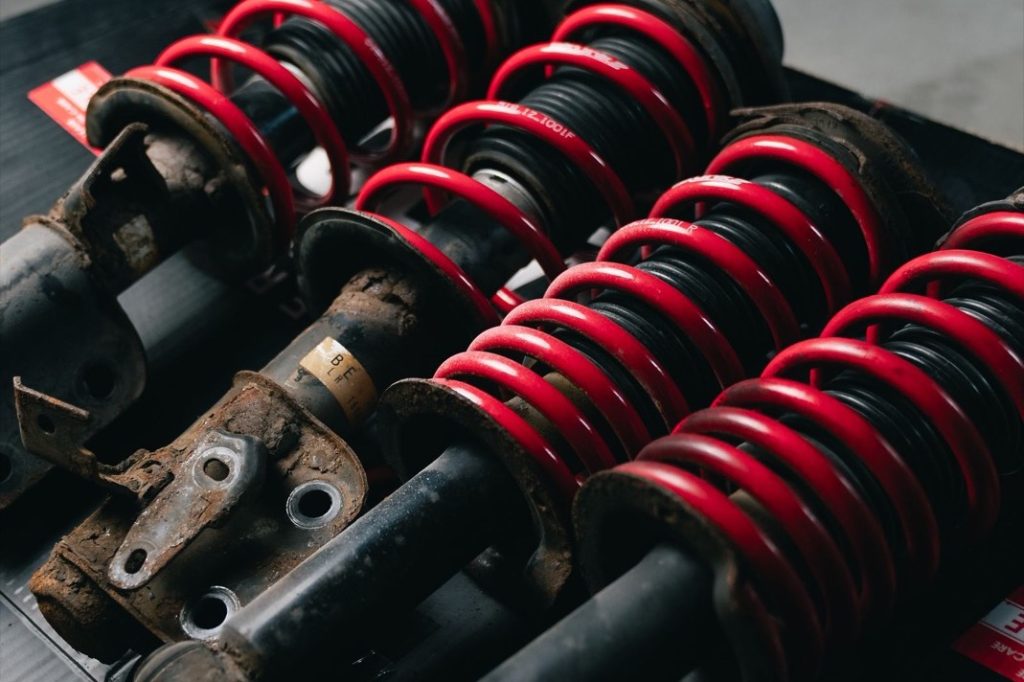
A shock does not hold the truck up. It controls what the spring does next. Fit a stiffer spring and keep a factory-valved shock and the truck will bounce; fit a firm shock to a soft spring and it will feel harsh over small stuff and still wallow over big stuff.
If you change spring rate or ride height, change the shocks with it, and buy the length that suits the new height. A shock that runs out of travel becomes a very expensive limit strap.
Lift: the parts people forget
A lift is not just springs. Raise a truck and you change the geometry of everything attached to the axle. Budget for:
- Alignment afterwards, always. Camber and caster do not fix themselves.
- Brake line length — factory lines can come up short at full droop.
- Track bar, pitman arm or drop brackets depending on the design.
- Driveshaft angles on anything beyond a modest lift. Vibration at highway speed is a geometry problem, not a balance problem.
- Headlight aim, which is both courteous and a legal requirement.
Bushings and ball joints: cheap parts, expensive consequences
Most of what people describe as “worn out suspension” is a handful of rubber bushings and a tired ball joint. They are inexpensive parts and they transform a truck. Before you buy springs, put the front end on a stand and check for play. It is common to find that the ride complaint was a control arm bushing all along.
Buying suspension parts used
Some suspension parts are good used buys and some are not. Control arms, knuckles, track bars, brackets and axle-side castings wear slowly, and a used one from a low-mileage truck is honest value. Shocks are a different matter: a used shock is a used wear item with no way to judge the remaining damping from a photograph. We list shocks and struts for what they are, and if you want a part to last, buy those new.
Coil springs sag with age and leaf packs settle. A used spring from a truck of similar age will give you a similar ride height to the one you have, which may not be what you were hoping for.
Matching to your truck
Suspension fitment is stricter than most body parts: the same model in the same year can carry different spring rates depending on cab, bed, engine and tow package. Send the year, make, model, trim, cab and bed configuration along with what the truck carries, and we will tell you what fits and what we would fit.
Every used part carries the 90-day parts-only limited warranty, and anything that does not fit as listed comes back at our cost within 30 days. The details are in the Warranty Policy and the Returns & Refund Policy.
Need the part, not the theory?
Send us the year, make, model, trim and VIN. We will confirm fitment before you order, and we answer email within 1 business day.