
On this page 6 sections
Brakes are the one system where “close enough” is not a budget decision. Used and take-off brake parts can be a sensible buy, but only some of them, and only when you know what you are looking at.
What is worth buying used
Castings and housings wear slowly and are expensive new. These are the parts where used money goes furthest:
- Calipers and caliper brackets — provided they are free, not seized, and the bores are clean.
- Backing plates and dust shields — usually replaced because they are rusted or bent, not worn.
- Hubs and bearing carriers — judged on the bearing, not the casting.
- Master cylinder and booster — on an older truck where new units are no longer made.
- Hard lines and brackets — if they are not corroded.
What is not
Some brake parts are consumable by design, and buying them part-worn saves very little while costing you the job twice:
- Pads and shoes. Buy new. The friction material is the service item.
- Rubber flexible hoses. Rubber ages whether the truck moves or not.
- Rotors below spec. A rotor has a minimum thickness stamped on it. Under that number it is scrap, however good it looks.
- Anything from an unknown accident history where heat damage is possible.
How to judge a used rotor from photographs
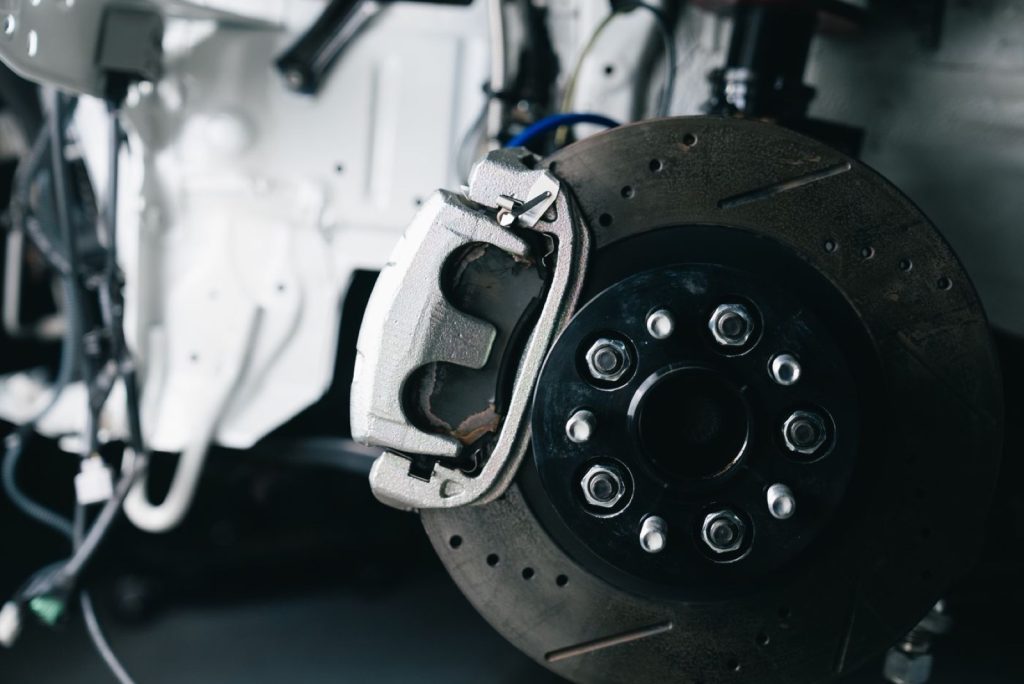
Rotors are the part people get wrong most often, because surface rust photographs far worse than it is. A rotor that has sat for a month will have an orange face that cleans up in the first few stops. What does not clean up:
- A lip at the outer edge. A pronounced ridge means material has gone. Measure before you fit.
- Heat cracking. Fine radial cracks running from the vanes outward.
- Blue or purple discolouration. That is a rotor that has been cooked.
- Deep scoring you can catch a fingernail in.
The minimum thickness is cast or stamped into the hat. Ask us for a photograph of it if the listing does not show it, and measure the part when it arrives, before it goes on the truck.
Calipers: free, clean and straight
A used caliper is worth having if the piston moves freely, the bore is clean, the slide pins are not seized and the bleed nipple is intact and will actually open. A seized nipple can turn a thirty-minute job into a snapped stud and a ruined afternoon.
Plan on new seals, new slide pin boots and fresh fluid as a matter of course. Treat a used caliper as a good casting with a service kit due, not as a finished assembly.
Match by part number where you can
Heavy-duty trucks changed brake package through a model run, and two trucks of the same year can carry different rotor diameters depending on the tow rating. The year, make and model get you close; the part number is what gets you right. Send us what you can read off the old part and we will match it.
Our side of it
Used brake components we list are photographed individually, with the condition stated plainly, and they carry the same 90-day parts-only limited warranty as every other used part we sell. If something arrives out of spec it goes back at our cost and you get a refund, not an argument — the terms are set out in the Warranty Policy and the Returns & Refund Policy.
One more thing, and it matters: brake work is not the place to learn on the job. If you are not confident bleeding a system or setting up a bearing, have a shop do the fitting. Keep the invoice.
Need the part, not the theory?
Send us the year, make, model, trim and VIN. We will confirm fitment before you order, and we answer email within 1 business day.